Chemical and Hydrodynamic Cleaning of Cooling and Water-Cooled Air Conditioning Condensers
In cooling and air conditioning systems, the condenser is the Achilles’ heel of the facility in terms of maintenance requirements.
The condenser requires regular attention, and neglecting it can lead to a reduction in the system’s cooling capacity, up to complete shutdown. Additionally, a significant portion of the system’s energy losses occurs at the condenser.
Unclean heat transfer surfaces cause high head pressure on the refrigeration compressor and reduce cooling efficiency.
Significant resources are invested in keeping heat transfer surfaces clean, either during system operation using on-line cleaning systems or by preventing scale buildup through cooling water treatment.
However, these cleaning or scale-prevention methods do not completely eliminate the need for periodic condenser cleaning. Proper maintenance can increase the intervals between cleanings but cannot completely replace them.
See also: Cleaning of Cooling Towers
Chemical Cleaning Method
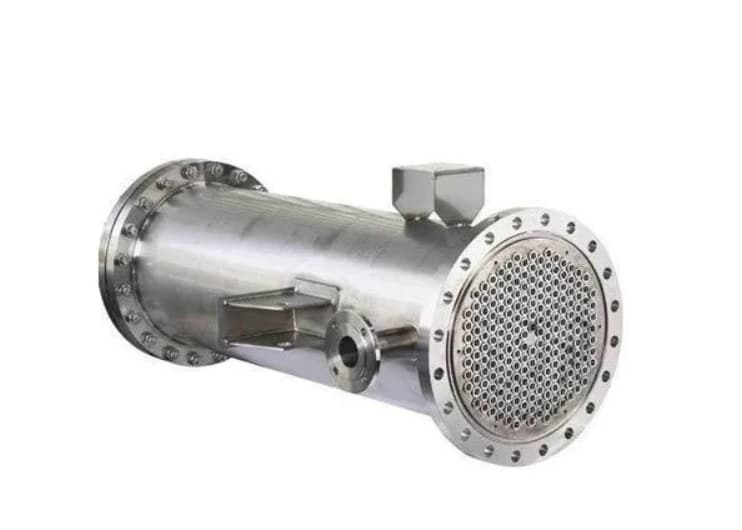
Chemical cleaning of the water side deposits is typically performed using a controlled acid solution circulated through the cooling passages. Most water-cooled condensers are of the tube-and-shell type, where cooling water flows inside the tubes and refrigerant flows in the shell surrounding the tubes.
Chemical cleaning must involve the correct selection of acid type, appropriate acid concentration, and correct dosing of an inhibitor. Several types of inhibitors are available on the market, differing in their protection level of healthy metal. The inhibitor should be added to the solution immediately before introducing the acid; it is not sufficient to rely solely on the supplier’s claim that the acid “contains inhibitor,” as the inhibitor’s effective lifespan in acidic solution is short.
There are methods to test the effectiveness of the inhibitor in protecting healthy metal, and these tests should be conducted at the start and during the chemical cleaning process.
Before chemical cleaning, to ensure successful cleaning, all passages throughout the condenser tubes must be open for acid flow. If there is any doubt, one must remove a condenser cover and flush the inside of each tube until all tubes have free passage. This is especially important for condensers where on-line chemical cleaning is used with cleaning balls, as balls may become stuck in some tubes.
Laboratory monitoring during chemical cleaning is mandatory. Several parameters can be measured to track the chemical reaction and determine when it is complete. This monitoring can also detect abnormal changes in the solution that require immediate stoppage of the cleaning.
Completion of chemical cleaning is determined based on laboratory test results. After cleaning, the system must be drained and both the used solution and the system neutralized using a neutralizing agent. The system must always be flushed with clean water in circulation until complete neutralization is achieved. Neutralization levels should be measured using a pH meter.
After chemical cleaning, one condenser cover should be removed, and the inside of each tube flushed using high-pressure water through a rotating nozzle at the end of a flexible lance. The lance is inserted into each tube, and the nozzle progresses along the entire tube length until it exits the other side.
Chemical cleaning is performed at water pressures ranging from 150 to 1000 bar, although typically, 500 bar is sufficient.